

Conformal Coating for Flexible PCBs

A flexible PCB may pass all electrical tests during production but still develop reliability issues later in actual use.
Moisture, condensation, flux residue, dust, oil vapor, and temperature cycling can gradually affect exposed conductive areas. In compact FPC assemblies with fine trace spacing, even small amounts of contamination may eventually lead to corrosion, leakage current, or unstable electrical performance.
This is why conformal coating is commonly added after SMT assembly.
The coating forms a thin insulating layer over the PCB surface to reduce environmental exposure and improve long-term stability. However, coating a flexible circuit requires more control than coating a standard rigid PCB. Material flexibility, bend areas, coating thickness, and masking accuracy all directly affect final reliability.
What Is Conformal Coating?
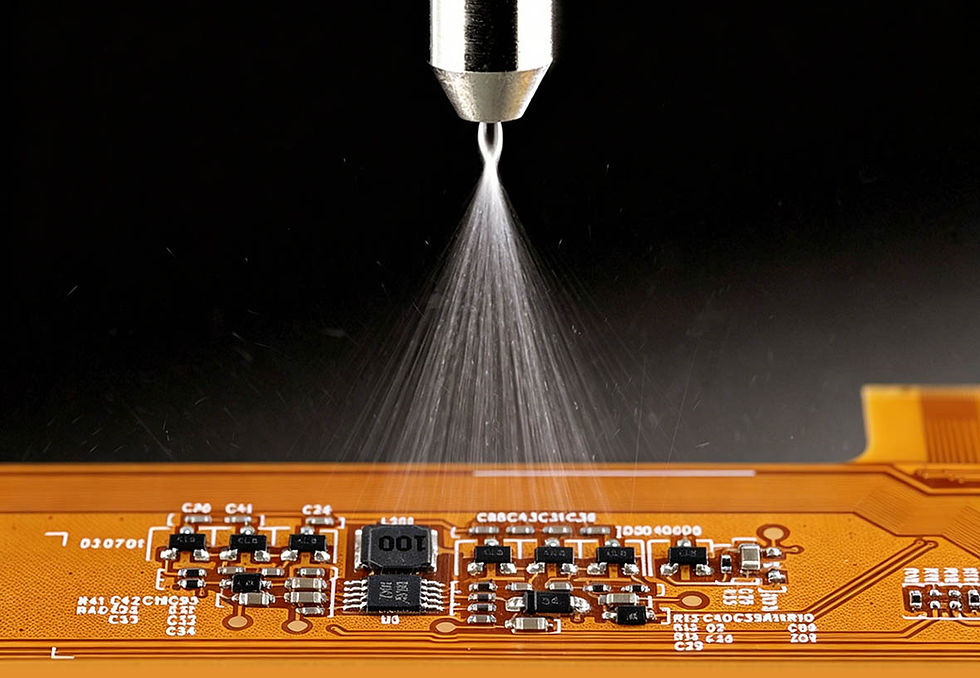
Conformal coating is a thin protective layer applied over a completed PCB assembly.
On flexible PCB assemblies, the coating mainly protects:
· Copper traces
· Solder joints
· Fine-pitch components
· Exposed conductive areas
The coating follows the surface shape of the board and components rather than forming a thick encapsulation layer.
Common conformal coating materials include Acrylic, Silicone, Polyurethane, Epoxy, Parylene.
Each material has different characteristics in terms of flexibility, chemical resistance, dielectric performance, and reworkability.
Why Flexible PCB Assemblies Use Conformal Coating
Flexible circuits are often thinner and more exposed than rigid boards. At the same time, many flexible PCB designs use compact layouts with narrow conductor spacing.
Under humid or contaminated conditions, these factors increase the risk of:
· Corrosion
· Leakage current
· Surface tracking
· Oxidation
· Electrical instability
Conformal coating helps isolate conductive surfaces from the surrounding environment and improves insulation reliability.
Moisture and Contamination Are Common Failure Sources
Many electronic failures develop slowly rather than appearing immediately after assembly.
Humidity may enter the product during daily operation and gradually accumulate around conductive areas. Dust, oil vapor, sweat, or cleaning residue can also remain on the PCB surface and absorb moisture over time.
As contamination builds up, leakage paths may form between adjacent conductors.
Conformal coating reduces direct exposure to these environmental factors and helps slow down corrosion development.
Coating Also Helps Protect Fine-Pitch Circuits
Modern FPC assemblies often use dense routing and small component spacing. Without additional insulation protection, conductive residue or moisture may increase the chance of electrical leakage between adjacent traces.
Common Conformal Coating Materials for Flexible PCB Assemblies
Different coating materials are selected depending on the product structure and operating environment.
Acrylic Coating
Acrylic coatings are widely used because they are relatively economical and easy to process.
Advantages include:
· Fast curing
· Easy rework
· Good humidity resistance
However, their resistance to solvents and harsh chemicals is more limited.
Silicone Coating
Silicone coatings remain flexible after curing and perform well under temperature variation.
They are commonly used on flexible assemblies that continue bending during operation.
Advantages include:
· High flexibility
· Low stress after curing
· Good thermal stability
Polyurethane Coating
Polyurethane coatings provide stronger resistance against:
· Chemicals
· Solvents
· Abrasion
They are generally tougher than acrylic coatings and more suitable for demanding environments.
Parylene Coating
Parylene is deposited through a vapor process instead of conventional spraying.
The coating thickness is extremely uniform, even inside narrow gaps and dense assemblies.
Advantages include:
· Very thin coating layer
· Excellent dielectric performance
· Uniform surface coverage
The process cost is typically higher than liquid coating methods.
Surface Preparation Is Critical Before Coating
Many coating failures are related to poor surface cleanliness rather than the coating material itself.
Flux residue, oil contamination, or ionic contamination may reduce coating adhesion and later create reliability problems.
Before coating, assemblies are commonly cleaned using:
· Ultrasonic cleaning
· Solvent cleaning
· DI water cleaning
Some manufacturers also use plasma treatment to improve coating adhesion on polyimide surfaces.
Bend Areas Require Additional Attention
One of the biggest differences between rigid PCB coating and FPC coating is the presence of dynamic bend areas.
If the coating becomes too rigid after curing, repeated flexing may eventually cause cracking or delamination.
For this reason, engineers usually evaluate:
· Bend radius
· Flex frequency
· Coating elasticity
· Coating thickness
In many dynamic flex applications, softer coating materials perform better over long-term use.
Certain Areas Must Remain Uncoated
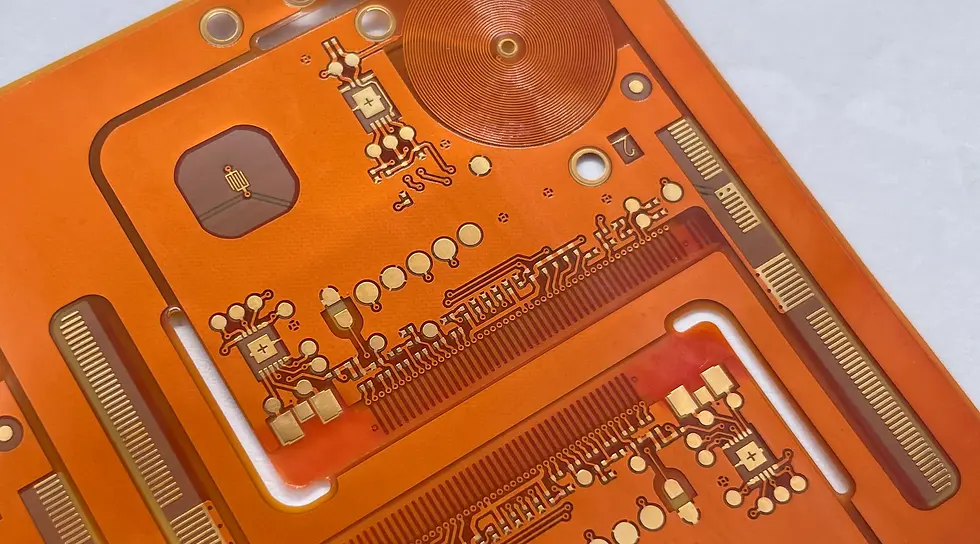
Not every area on the PCB can be covered by conformal coating.
Typical keep-out areas include:
· Connectors
· Gold fingers
· Test pads
· Contact terminals
Improper masking may later affect electrical connection or assembly performance.
Selective coating equipment is often used to improve coating precision and reduce manual masking work.
Different Coating Methods Are Used in Production
Several application methods are commonly used depending on board complexity and production volume.
Spray Coating
Spray coating is widely used for standard production because it provides relatively even surface coverage.
Selective Coating
Selective coating uses programmable equipment to apply coating only where protection is needed.
This method improves consistency and reduces masking requirements.
Dip Coating
Dip coating provides full coverage but requires careful process control to avoid excessive buildup on flexible sections.
Vapor Deposition
Parylene coating uses vapor deposition to achieve highly uniform coverage on complex geometries.
Coating Thickness Must Be Controlled Carefully
Insufficient coating thickness may reduce environmental protection.
Excessive coating thickness can also create problems on flexible circuits, including:
· Reduced flexibility
· Stress concentration during bending
· Uneven surfaces
· Bridging between fine traces
Maintaining stable coating thickness is therefore an important part of process control.
Post-Coating Inspection Is Still Necessary
After curing, assemblies are usually inspected to verify coating quality and coverage.
Common inspection methods include:
· UV inspection
· Thickness verification
· Coverage inspection
· Flex testing
For flexible PCB assemblies, bend testing is especially important to confirm the coating will not crack during use.
Common Conformal Coating Problems on Flexible PCB Assemblies
Several issues may appear if the material or process is not properly controlled.
Coating Cracks During Flexing: This usually indicates the coating material is too rigid for the application.
Poor Adhesion: Residue or insufficient surface activation may cause coating separation from the PCB surface.
Bubbles or Voids: Air trapped during spraying may later create insulation weak points inside the coating layer.
Uneven Coating: Inconsistent coating thickness may affect both flexibility and insulation performance.

Conclusion
Conformal coating helps improve the long-term reliability of flexible PCB assemblies by protecting exposed conductive areas from moisture, contamination, corrosion, and electrical leakage.
However, coating a flexible circuit is not simply an additional finishing step. Material selection, surface preparation, bend-area design, masking accuracy, and coating thickness all influence final performance.
A well-controlled coating process not only improves environmental protection, but also helps maintain stable electrical and mechanical reliability over time.


Comments