

PCB Etching Solution: Types, Applications, and Selection Guide

Etching is one of the most critical chemical processes in PCB and flexible PCB manufacturing. It removes unwanted copper from the laminate. It leaves behind the designed circuit pattern. The choice of a PCB etching solution has a direct influence on line accuracy. It also affects production speed, undercut control, and manufacturing cost.
Different etching systems have different chemical characteristics. Some are suitable for traditional production. Others are designed for high-volume manufacturing with finer circuit patterns. Understanding these differences helps engineers choose a process. This process matches both the product design and the production environment.

What Is a PCB Etching Solution?
A PCB etching solution is a chemical liquid. It dissolves exposed copper after the circuit pattern has been protected by a resist layer. The resist remains intact. Meanwhile, the uncovered copper reacts with the chemical solution. Then it is removed from the board.
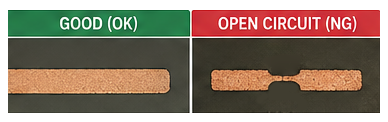
This process creates the conductive traces required for electrical connections. In flexible PCB manufacturing, etching accuracy becomes even more important. This is because many products contain thin copper foil and fine-pitch circuits. Excessive side etching may reduce conductor width. It might even cause open circuits in bad cases.
The performance of a PCB etching solution depends on several factors. Chemical concentration and temperature change the outcome. Spray pressure and regeneration control also play big roles. Copper loading is another factor that influences the final etching quality.
Common Types
Several chemical systems have been used in PCB manufacturing over the past decades. Each offers different advantages. These advantages depend on production requirements.
Ferric Chloride
Ferric chloride was once the most common PCB etching solution for single-sided boards. It was also used a lot in inner-layer processing.
The process is relatively simple. However, its etching speed is slow. It normally runs around 20 to 25 μm per minute. Copper dissolution capacity is also limited. It usually stays between 35 and 40 g/L. These characteristics make it less suitable for modern high-volume production.
Another disadvantage is waste treatment. Ferric chloride produces waste solution with relatively low recycling value. It can also stain production equipment. It stains working areas if maintenance is not well controlled.
Although ferric chloride is still used in some laboratories, many factories have changed. It is also found in prototype production. Many manufacturers have gradually replaced it with cupric chloride systems.
Acidic Cupric Chloride
Acidic cupric chloride is one of the most widely used chemical systems in PCB production.
The solution mainly consists of cupric chloride. It also contains hydrochloric acid and sodium chloride or ammonium chloride. During production, oxidizing agents continuously regenerate the solution. These agents can be chlorine gas, sodium chlorate, or hydrogen peroxide. This allows the chemical activity to remain stable throughout long production runs.
Compared with ferric chloride, this PCB etching solution offers lower operating costs. The spent solution also has recycling value. This is because the dissolved copper can be recovered later.
When regeneration is properly controlled, acidic cupric chloride provides stable etching performance. It also gives good etching factors. However, process control is essential here.
Insufficient oxidation converts cupric chloride into cuprous chloride. After water rinsing, white cuprous chloride deposits may appear on the board surface. Excessive oxidation creates free chlorine gas. This gas can corrode metallic components inside the etching equipment. Crystal formation may also block spray nozzles after cooling. This makes regular cleaning necessary for the machine.
Why Alkaline Cupric Chloride Has Become the Main PCB Etching Solution
Modern flexible PCB manufacturers increasingly choose alkaline cupric chloride. It serves as their standard PCB etching solution.
This chemical system is prepared with cupric chloride and ammonium chloride. It also uses ammonia water and several additives. Depending on process requirements, cobalt chloride or sodium chloride might be added. Ammonium carbonate or ammonium phosphate may also be used. These chemicals improve solution stability and etching performance.
One major advantage is its high etching speed. Production lines can achieve speeds above 70 μm per minute under optimized conditions. Copper loading capacity can also exceed 70g/L. This makes the solution suitable for continuous mass production.
Another benefit is the high etching factor. Values greater than 3.5 help reduce undercutting. They improve conductor profile accuracy at the same time. This becomes increasingly important when manufacturing fine-line flexible circuits.
The solution is relatively stable during operation. It also provides better safety compared with some acidic systems. Most organic and metallic resist materials can be used with alkaline cupric chloride. Silver is the primary exception to this rule.
Because of these characteristics, alkaline cupric chloride has become popular. It is the preferred PCB etching solution for many high-volume PCB and FPC production lines.
Resist Compatibility with Different Types
Selecting the correct resist material is just as important as selecting the chemical itself.
Ferric chloride and acidic cupric chloride work well with dry film. They also work with wet film, photoresist, and printed etching inks. They are compatible with gold-plated surfaces too. However, they are generally not recommended for tin resists. They should not be used with tin-lead or nickel resists either.
Alkaline cupric chloride shows different compatibility. It performs very well with tin and tin-lead systems. It also works with gold and nickel resist systems. Dry film and printed ink resists may experience certain limitations. This depends on formulation and process conditions.
For this reason, manufacturers normally select the entire process flow together. They avoid choosing the PCB etching solution independently.
How Manufacturers Select a PCB Etching Solution
There is no universal chemical that fits every PCB application.
Manufacturers usually evaluate several production factors before selecting a PCB etching solution. These include circuit width and spacing. They also check copper thickness and production volume. Waste treatment requirements and equipment configuration matter too. Operating cost and the resist system used during imaging are also checked.
For high-density flexible PCBs, stable regeneration is very important. Accurate sidewall control often becomes more crucial than chemical cost alone. A faster etching rate does not always produce better circuit quality. This is true if undercut cannot be controlled properly.

Conclusion
The PCB etching solution plays a significant role in determining circuit accuracy. It also affects manufacturing efficiency and production stability.
Ferric chloride represents a traditional technology. It is still suitable for certain specific applications. Acidic cupric chloride provides economical operation with recyclable chemistry. However, careful regeneration control is necessary for it. Alkaline cupric chloride has become the preferred choice for many modern PCB and flexible PCB manufacturers. This is because of its higher etching speed, larger copper capacity, and better etching factor.
Selecting the proper chemical system requires balancing product requirements. It also requires looking at equipment capability, resist compatibility, and long-term manufacturing costs. For precision flexible PCB production, the right PCB etching solution is often a key factor. It lies behind consistent circuit quality.


Comments