

FPC Circuit Board Plating Leads

FPC circuit boards are widely used in compact, high-performance electronic products. One critical challenge in FPC manufacturing is how to perform surface finishing on isolated pads—copper pads that are electrically disconnected from the main circuit after patterning. This is where plating leads come into play.
What Are Plating Leads in FPC Boards?
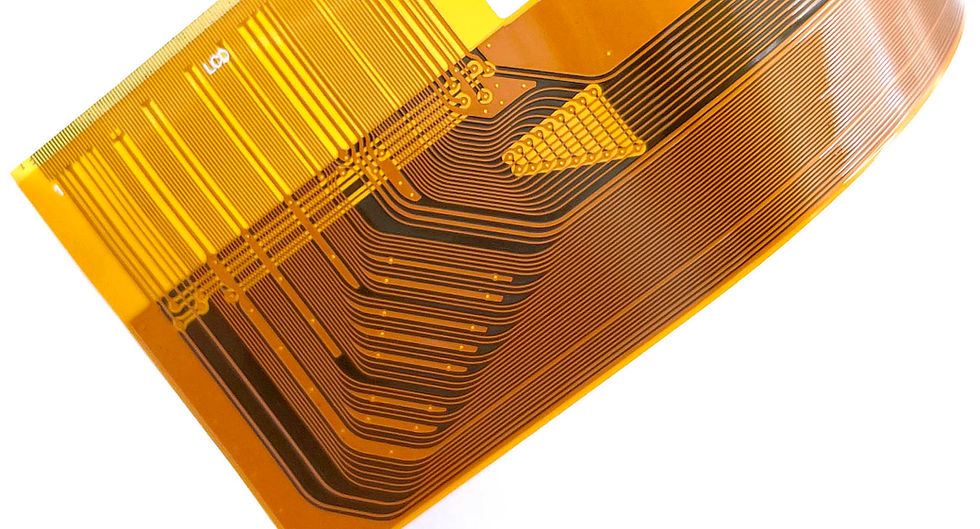
In flexible PCB fabrication, plating leads are temporary conductive traces added to isolated pads to ensure electrical connectivity during electroplating. Since electroplating requires a complete current path, a truly isolated pad cannot be plated directly. By attaching a thin plating lead, manufacturers allow current to flow, enabling the deposition of metals like gold.
After plating, these leads are removed or etched away, leaving only the functional pads.

Surface Finishing of Isolated Pads
FPC circuit boards can use several types of surface finishes:
Electroplated Nickel or Silver
These finishes do not require plating leads, even for isolated pads.
They can be applied directly after the PCB has been etched.
Direct Gold Plating (Hard Gold or Selective Gold)
Requires plating leads for isolated pads.
After electroplating, the leads must be removed through a secondary etching step.
This ensures that gold is deposited only where needed and that isolated pads have reliable finishes.
Other Finishes (Electroless Nickel/Immersion Gold, OSP)
Do not rely on external current, so isolated pads can be plated without leads.
Typically thinner and suitable for moderate wear requirements.
Differences Between Plating Leads and Traditional Surface Finishing
Feature | Traditional Finishing (Ni/Ag) | Direct Gold with Plating Leads |
Electrical Path | Not required | Required via plating leads |
Process Timing | After etching | Needs temporary leads, then second etching |
Thickness & Durability | Moderate | Thick, wear-resistant |
Complexity | Simple | Additional steps: add leads → plate → remove leads |

Why Plating Leads Are Important for FPCs
Enables electroplating on isolated pads that would otherwise be impossible.
Ensures reliable soldering and bonding for high-performance applications.
Supports advanced FPC designs with complex pad layouts and selective gold plating requirements.
Conclusion
In FPC board manufacturing, plating leads are essential for direct gold plating of isolated pads. While traditional finishes like Ni or Ag can be applied directly after etching, direct gold requires temporary leads to create a conductive path. After plating, these leads are removed to achieve precise, high-quality finishes.
For high-reliability FPC production and advanced surface finishing solutions, Flex Plus offers expertise in plating leads, isolated pad processing, and selective gold plating.


Comments