

What is flex circuit board?

A flex circuit board, also called flex PCB or flexible printed circuit, is a lightweight and bendable alternative to traditional rigid PCBs. Built on flexible substrates, flex circuits can fold, twist, and fit into compact spaces without losing reliability. This makes them essential for today’s smaller, lighter, and smarter electronic devices.
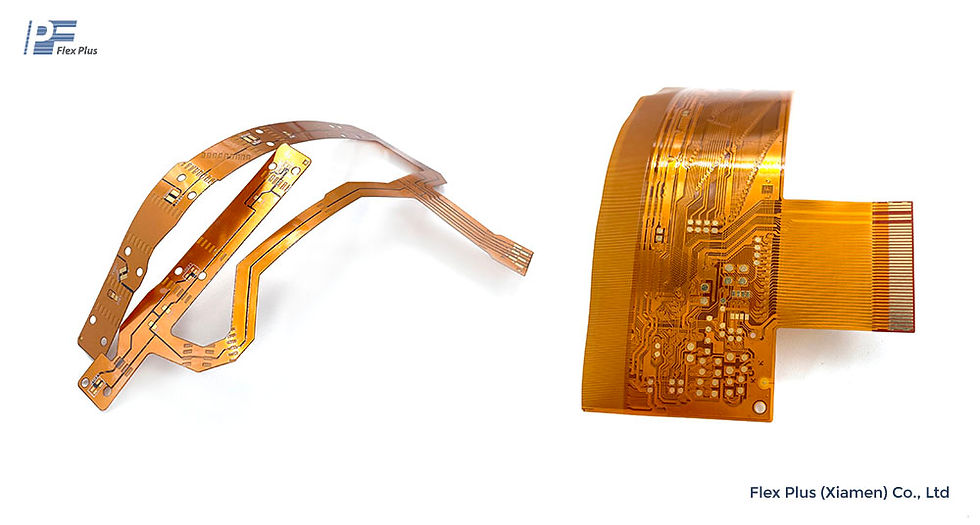
Key Features of Flex Circuit Technology
Modern flex PCB fabrication uses specialized materials and processes designed to deliver both flexibility and durability.
Substrate Materials
PET: Low cost, flexible enough for simple devices like LED strips, but limited heat resistance.
PI: Excellent thermal stability and durability, used in demanding applications such as aerospace, automotive, and advanced medical devices.👉 If reliability is the priority, PI is the material of choice.
Copper Conductors
Conductive traces are patterned on the substrate using etching or printing.
Protective Coverlay
A coverlay film insulates copper traces and provides environmental protection.
Adhesives
Bond flexible layers together and improve reliability during assembly.
Types of Flexible Circuit Boards
Flex PCBs come in different structures, each suited to specific applications:
Single-Layer Flex – Simple, low-cost circuits with copper on one side of the film.
Double-Sided Flex – Conductors on both sides connected by vias, enabling more complex routing.
Multilayer Flex circuit board – Multiple copper layers laminated together for high-density designs.
Rigid-Flex Circuits – A hybrid of rigid and flexible sections, combining stability with flexibility.
Applications of Flexible Circuit Boards
High-Temperature and High-Density Applications
Flexible PCBs can handle fine-pitch designs and harsh working conditions. For example, they are often found in automotive radar units, medical imaging equipment, and aerospace systems, where circuits must survive both heat and vibration.
Thanks to their adaptability, flex PCBs are widely used across industries:
Consumer Electronics – Smartphones, tablets, cameras, and wearable devices.
Automotive – Dashboard displays, sensors, LED lighting, and engine control units.
Medical Devices – Hearing aids, diagnostic tools, and minimally invasive equipment.
Aerospace & Defense – Avionics, radar systems, and lightweight rugged electronics.
Flex Circuit Board Manufacturing Process

The fabrication of a flex circuit board involves several precise steps:
Substrate Preparation – Lamination of copper foil onto flexible PI film.
Circuit Imaging – Photolithography or laser techniques define the circuit pattern.
Etching – Removes excess copper to leave clean conductive traces.
Coverlay Application – Adds insulation and protection.
Component Assembly – SMT or THT methods mount electronic components.
Testing & Quality Check – Ensures reliability under bending and mechanical stress.
For the complete process flow, please refer to:
Advantages of Flex PCBs
Space & Weight Saving – Ideal for compact, portable designs.
Durability – Resistant to vibration, shock, and thermal stress.
Design Flexibility – Allows 3D configurations and reduces the need for connectors.
At Flex Plus, we don’t just manufacture. We support customers from the design stage, helping avoid common pitfalls in bending radius, impedance control, and layer stack-up. This partnership approach often reduces time-to-market and improves yield in production.
Why Not Make Every Circuit Board Flexible?
Although flexible PCB boards are versatile, they’re not always the best fit. Rigid PCBs are cheaper to produce and easier to assemble in large volumes. In practice, many designs use rigid-flex structures, combining the reliability of rigid boards with the adaptability of flex.
Technology Advancements
New materials, finer trace capabilities, and adhesiveless copper films are expanding what flex PCBs can achieve.
With rapid advances in materials and microelectronics, the future of flex circuit board is bright. They will continue to enable next-generation devices that are smaller, lighter, and more powerful, keeping flex circuit board technology at the heart of electronic innovation.
Flexible PCB FAQ
Q1: How long does a flex PCB last?
It depends on the design. A properly made PI flex board can withstand thousands of bend cycles.
Q2: What’s the usual thickness?
Between 0.05 mm and 0.3 mm, depending on layers and use case.
Q3: Are flex PCBs always better than rigid ones?
No. They solve space and weight issues, but rigid boards are cheaper. The best solution is often a rigid-flex combination.
Q4: What finishes can I choose?
Common options are ENIG, OSP, HASL, and Immersion Tin. Each has pros and cons depending on cost and soldering needs.
Q5: Which industries use them most?
Consumer electronics, automotive, aerospace, defense, and medical—all rely heavily on flexible PCB technology.
Looking for a reliable flex PCB manufacturer? At Flex Plus, we specialize in flexible and rigid-flex PCB design, fabrication, and assembly.


Comments