

Flex PCB Connector: Types, Design Considerations, and Reliability Guide

Updated: Feb 5
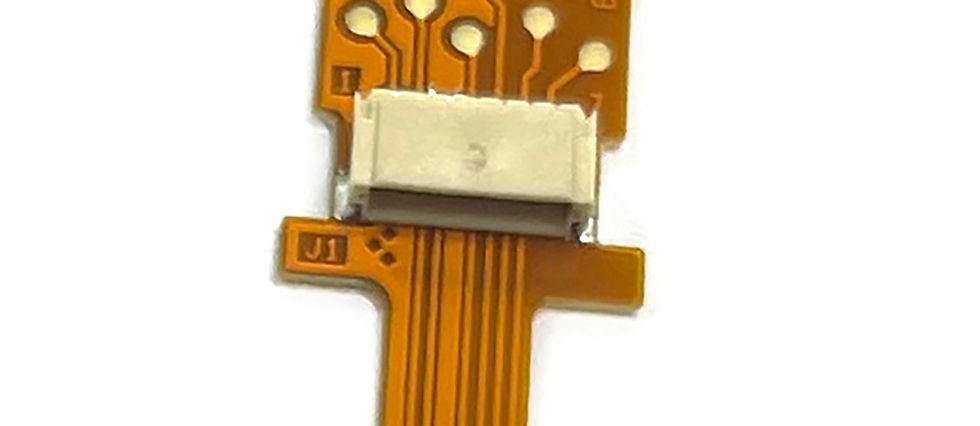
A flex PCB connector, also known as an flexible PCB connector, it is a component. Usually used to connect a flexible printed circuit board to a rigid PCB, display module, or electronic device. In real applications, connector type and interface design directly affect assembly yield, signal stability, and bending reliability of flexible circuits.
Flex PCB connectors are widely used in compact electronic systems where space constraints, repeated insertion, or controlled bending are required.

Common Types of Flex PCB Connectors
ZIF (Zero Insertion Force) Connectors
This types of connector are the most commonly used connectors for flex PCB assemblies. They allow easy insertion of the flexible PCB without mechanical stress and provide stable electrical contact after locking. They are widely used in smartphones, tablets, cameras, and display modules.
LIF (Low Insertion Force) Connectors
LIF connectors require a small insertion force and are suitable for applications where cost and space are critical. However, they generally offer lower mechanical retention compared to ZIF connectors.
Solder-Type Flex PCB Connectors
In this design, the flex PCB is directly soldered to a connector or rigid board. This method provides high mechanical strength and stable signal transmission, making it suitable for high-reliability or high-vibration environments.
Pitch Selection for Flex PCB Connectors
Connector pitch selection is a key factor in flex PCB design and manufacturing.
Common pitch options include: 0.3 mm, 0.5 mm, 1.0 mm
Smaller pitch connectors enable higher signal density but require tighter manufacturing tolerances and stricter assembly control. Connector pitch should always be evaluated together with copper thickness, pad design, and assembly capability.
Design Considerations at the Connector Area
The connector interface is the most mechanically sensitive area of a flex PCB.
Key design considerations include:
Stiffener reinforcement to improve insertion durability
Pad size and plating to prevent pad lifting
Copper thickness selection near the connector
Strain relief design to reduce stress concentration
Improper connector area design is one of the most common causes of flex PCB failure during assembly and operation.
Common Failure Modes of Flex PCB Connectors
Typical connector-related failures include:
Copper trace cracking at the connector edge
Pad peeling during repeated insertion
Intermittent contact caused by bending stress
Delamination near the stiffener boundary
Understanding these failure modes helps improve flex PCB reliability and product lifetime.
Flex PCB Connector Selection for Reliable Manufacturing
Connector selection should be evaluated together with:
Flex PCB manufacturing process
Assembly method (SMT or soldered)
Expected bending cycles
Operating environment and vibration level
Following IPC-2223 design guidelines and manufacturer-recommended limits can significantly improve production yield and long-term reliability.

Applications of Flex PCB Connectors
Flex PCB connectors are widely used in:
Consumer electronics
Automotive electronics
Medical devices
Industrial and aerospace systems
Their compact size and reliable interconnection make them essential in modern electronic design.
Conclusion
Flex PCB connectors is a very important part in ensuring reliable electrical and mechanical connections between flexible circuits and electronic systems. Select the right type, pitch design, and interface reinforcement are essential for achieving stable performance in flexible PCB applications.
As a professional flexible PCB manufacturer, Flex Plus provides customized flex PCB and assembly solutions. If you have connector design or manufacturing questions, feel free to contact us.


Comments